The Warp and Weft of Sorrow
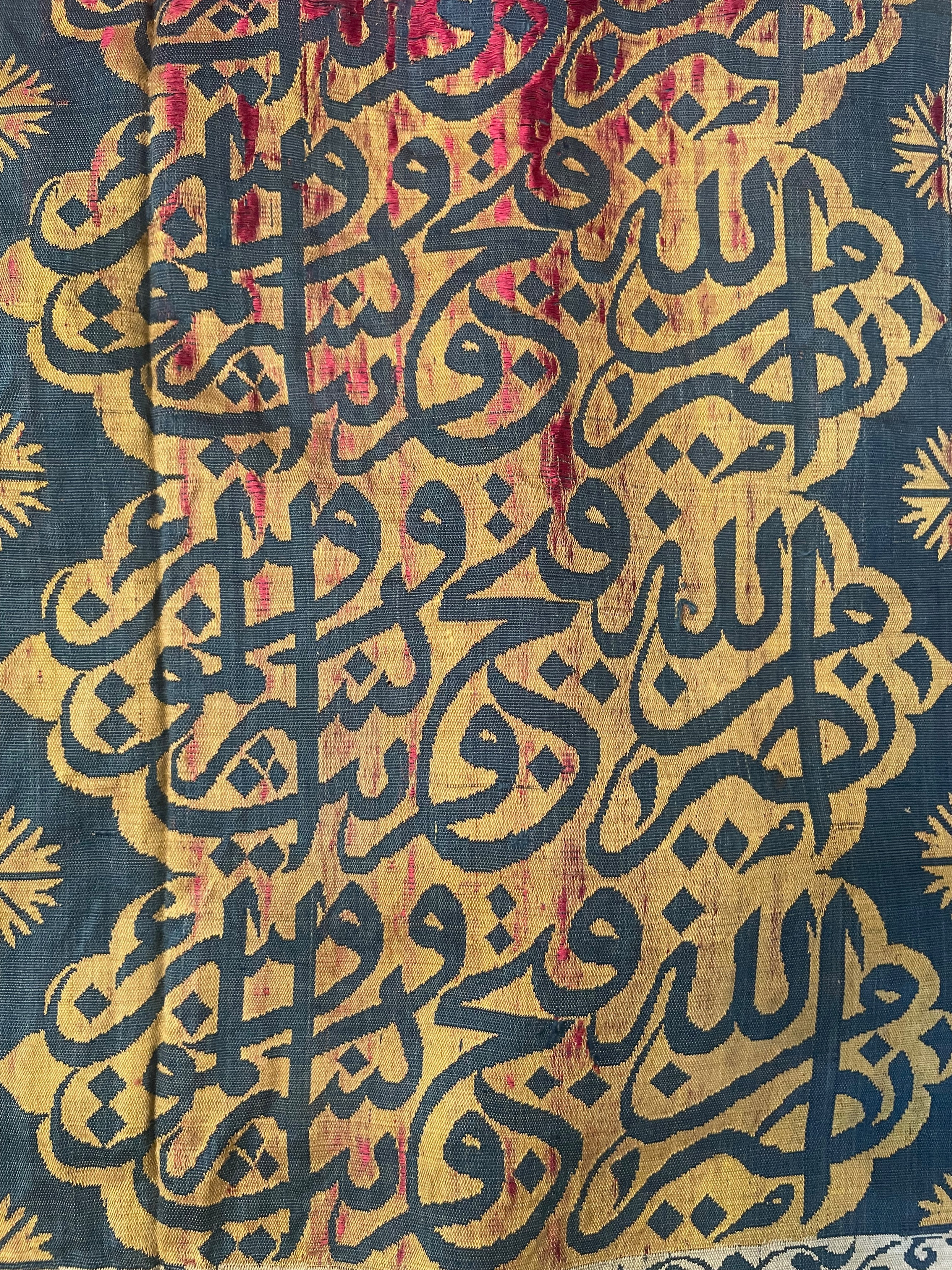
As an autumn highlight, we brought out one of the most fascinating and precious items in our collection: an almost 5m long, ca. 90cm wide piece of intricately woven silk brocade, displaying a non-repetitive pattern of calligraphic inscriptions dedicated to Imam Hossein and the ritual of Ashūra.
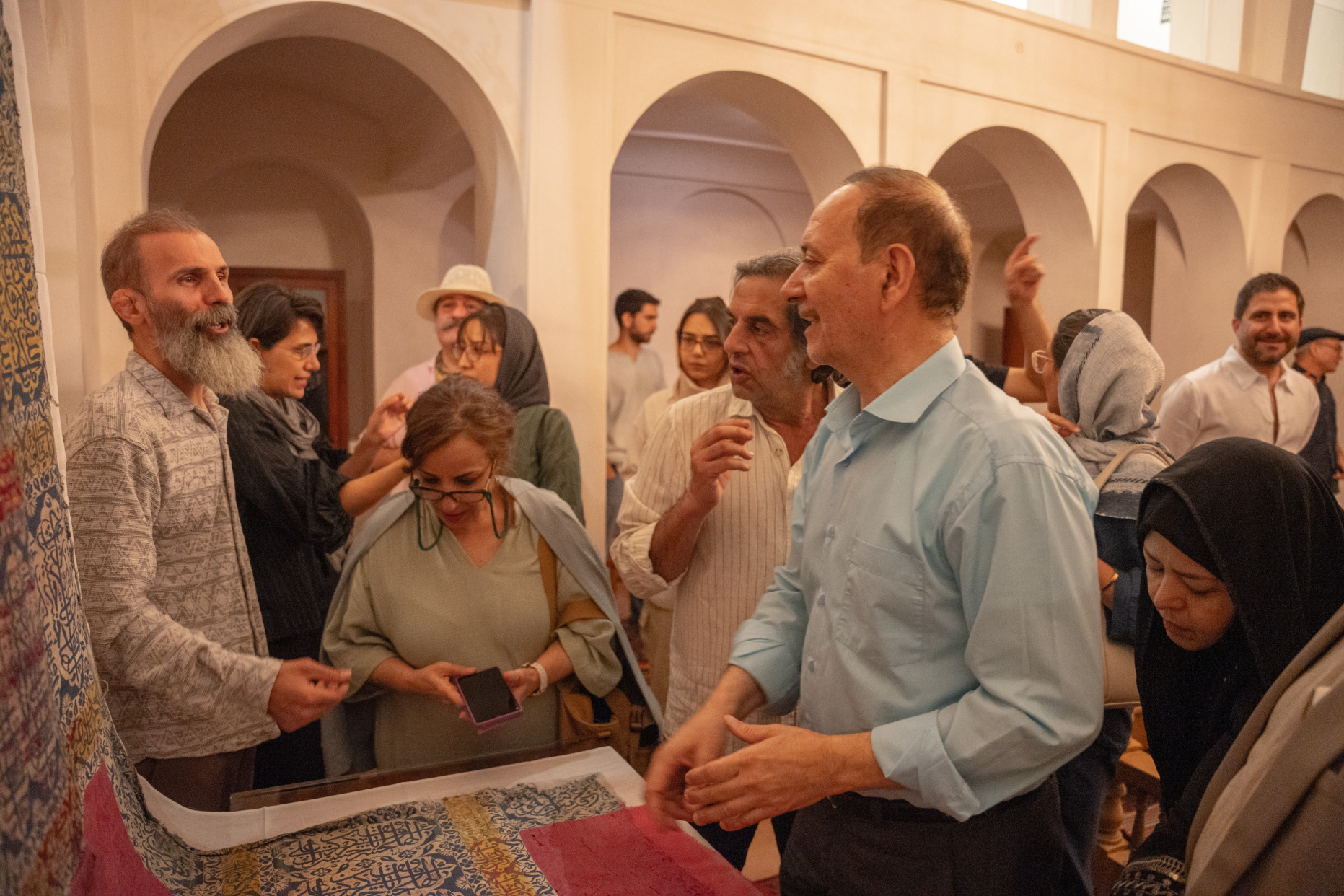
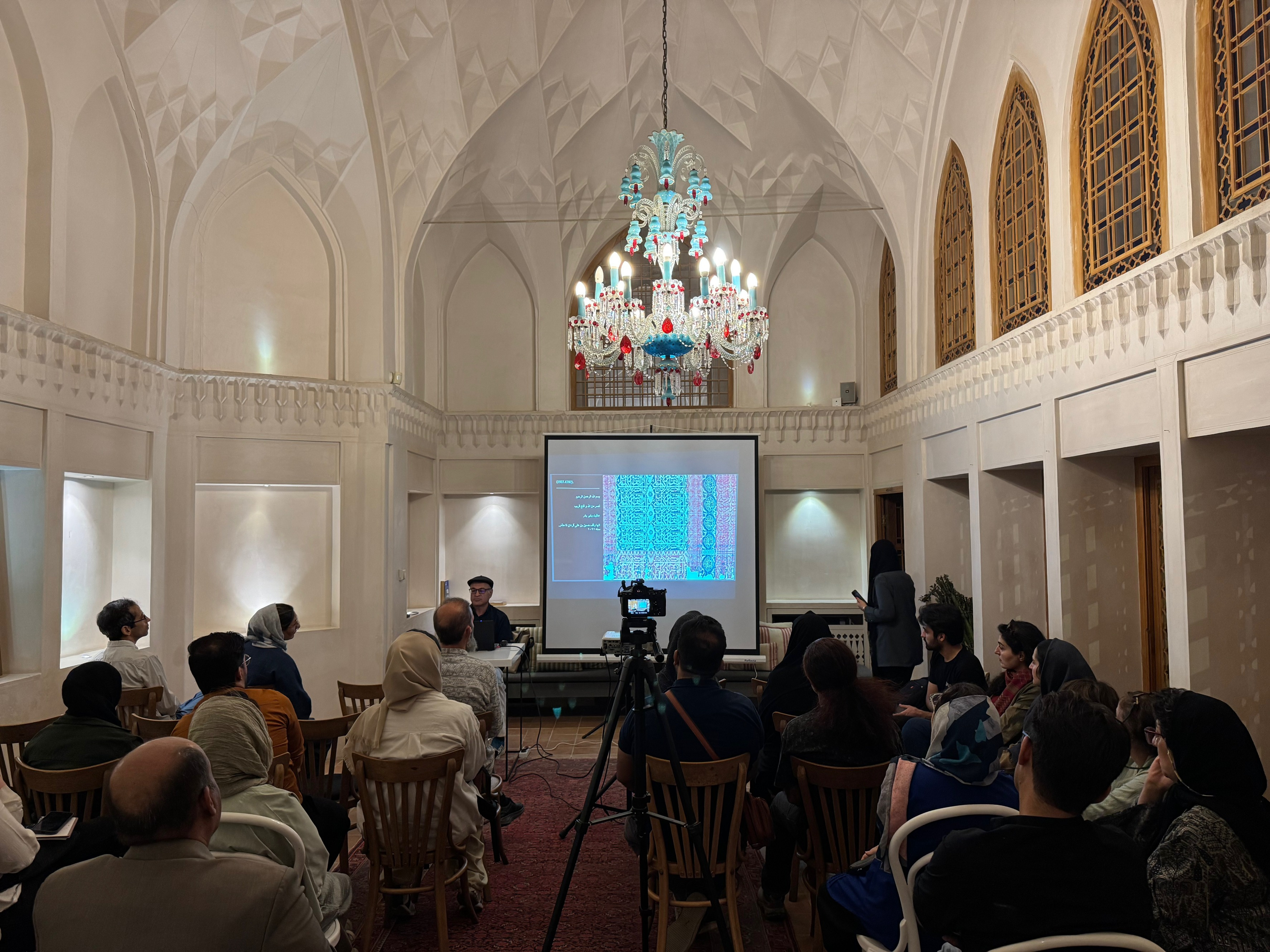
Our panel consisted of the presentation of a research paper by Dr. Mashhadi Nooshabadi and Mohamad Reza Ghiasian from the University of Kashan focusing on the background of Ashura themes in silk textiles, followed by a detailed technical weaving analysis by Ruhollah Dehghani, artist and weaving expert, Iran Cultural Heritage.
Dated by experts to the Safavid era, this textile is part of a series of similar woven silks, executed in various degrees of mastery, forming parts of museum collections worldwide.
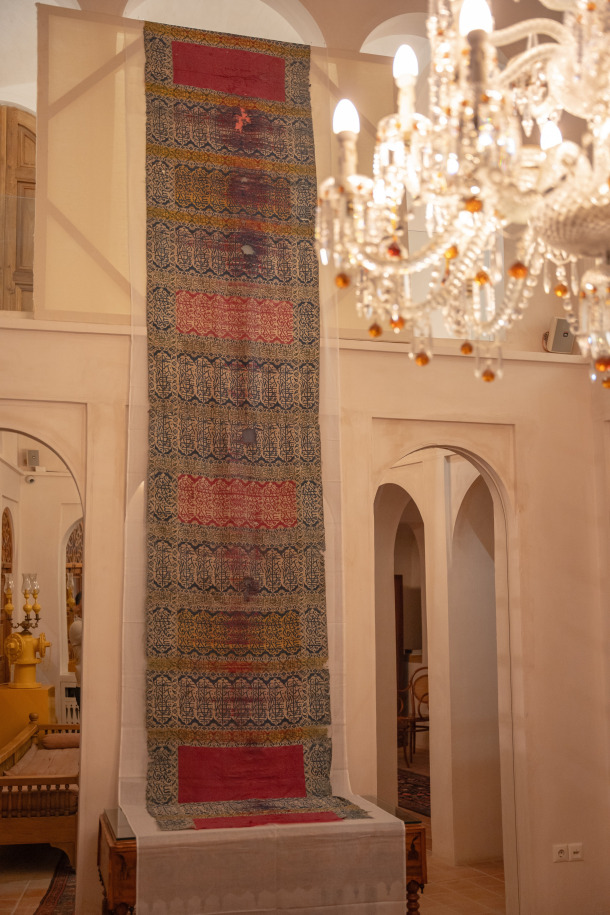
Despite their varying dimensions and potential diverse functions, most of these works were originally classified as tomb covers without being examined collectively, whereas it can be concluded that certain examples, such as the textile in our collection, were used as mouning banners (Alam), and most likely created in weaving workshops in Kashan.
